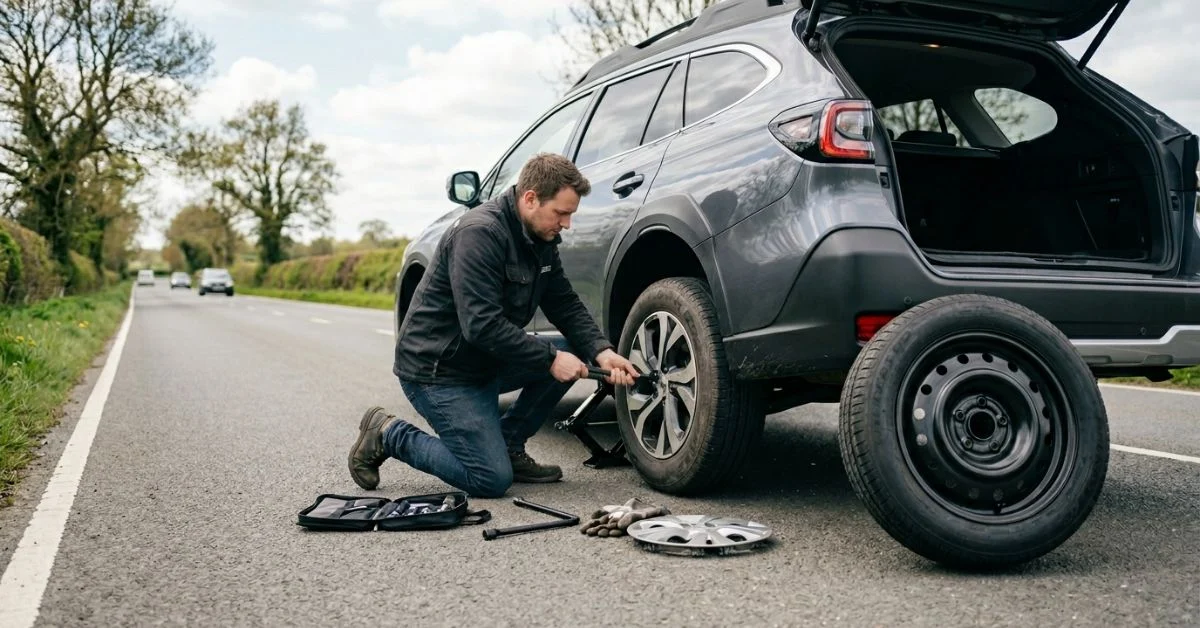
An unexpected flat tire can happen anytime, on the road, at home, or during travel.
Knowing how to change a tire is a simple but powerful skill that can save time, money, and stress.
Whether it’s a puncture, worn-out tread, or an emergency breakdown, this complete guide will walk you through everything in a safe, easy, and beginner-friendly way.
Why You Might Need to Change a Tire
There are several common reasons why drivers need to replace a tire:
- Flat tire due to a puncture
- Worn-out tire tread (low grip and unsafe driving)
- Tire damage (cuts, bulges, cracks)
- Seasonal tire change (summer ↔ winter tires)
- Old tires (usually over 6–10 years)
Always check your spare tire condition when replacing damaged or old tires.
Tools You Need Before Changing a Tire
Before starting, make sure you have these essential tools:
- Spare tire
- Car jack
- Lug wrench (wheel wrench)
- Wheel chocks (or bricks/rocks)
- Hazard warning triangle (optional but useful)
- Gloves (for safety)
These tools are usually found in your emergency roadside kit.
Safety Steps Before You Start
Safety is the most important part of changing a tire. Follow these steps first:
- Park your car on a flat and stable surface
- Turn on hazard lights
- Apply the parking brake
- Put the car in gear (manual) or park (automatic)
- Place wheel chocks behind the opposite tire
- Ensure no one is inside the vehicle
If you are on the road, move your vehicle to a safe location away from traffic.
Step-by-Step: How to Change a Tire
Now let’s go through the complete process.
1. Remove the Hubcap (If Present)

Take off the hubcap or wheel cover to access the lug nuts.
2. Loosen the Lug Nuts
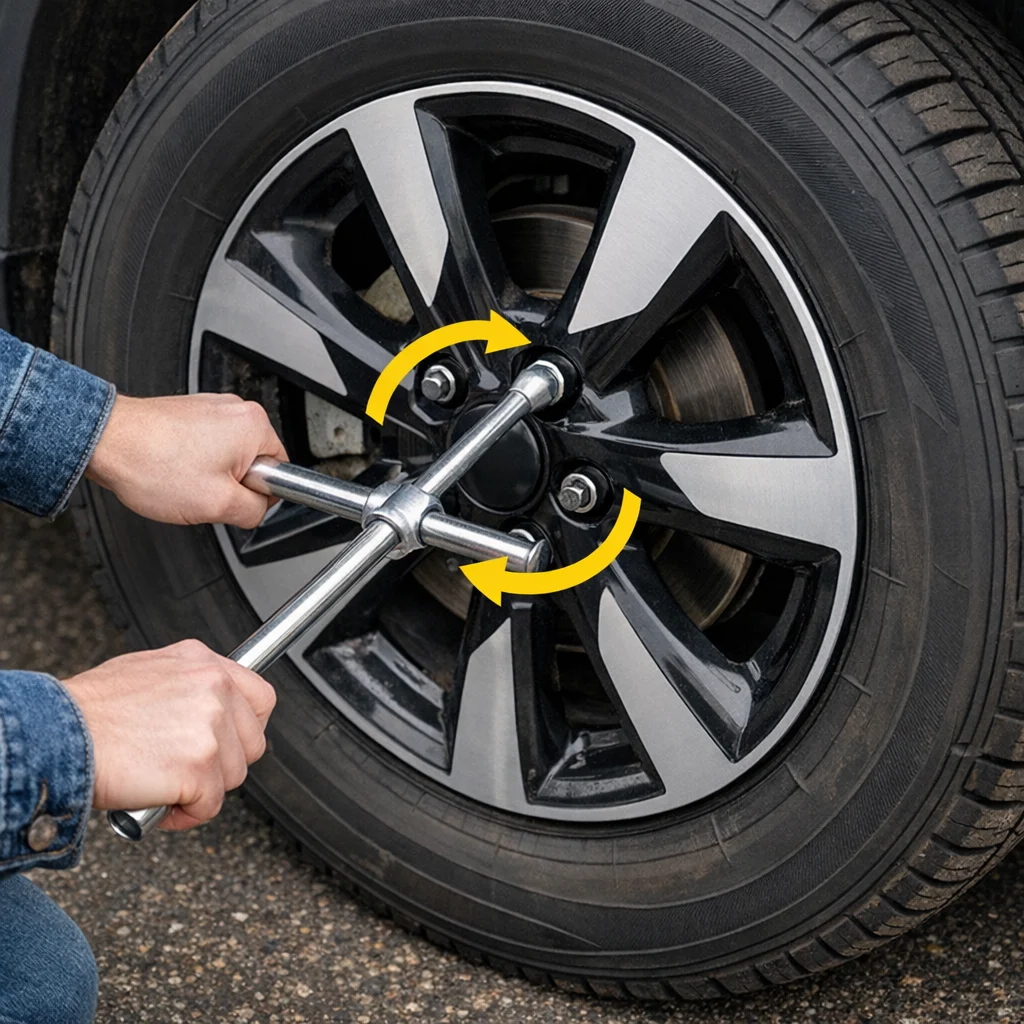
Use a lug wrench to slightly loosen the lug nuts.
👉 Do NOT remove them completely yet.
👉 Turn counterclockwise.
3. Position the Jack and Lift the Car
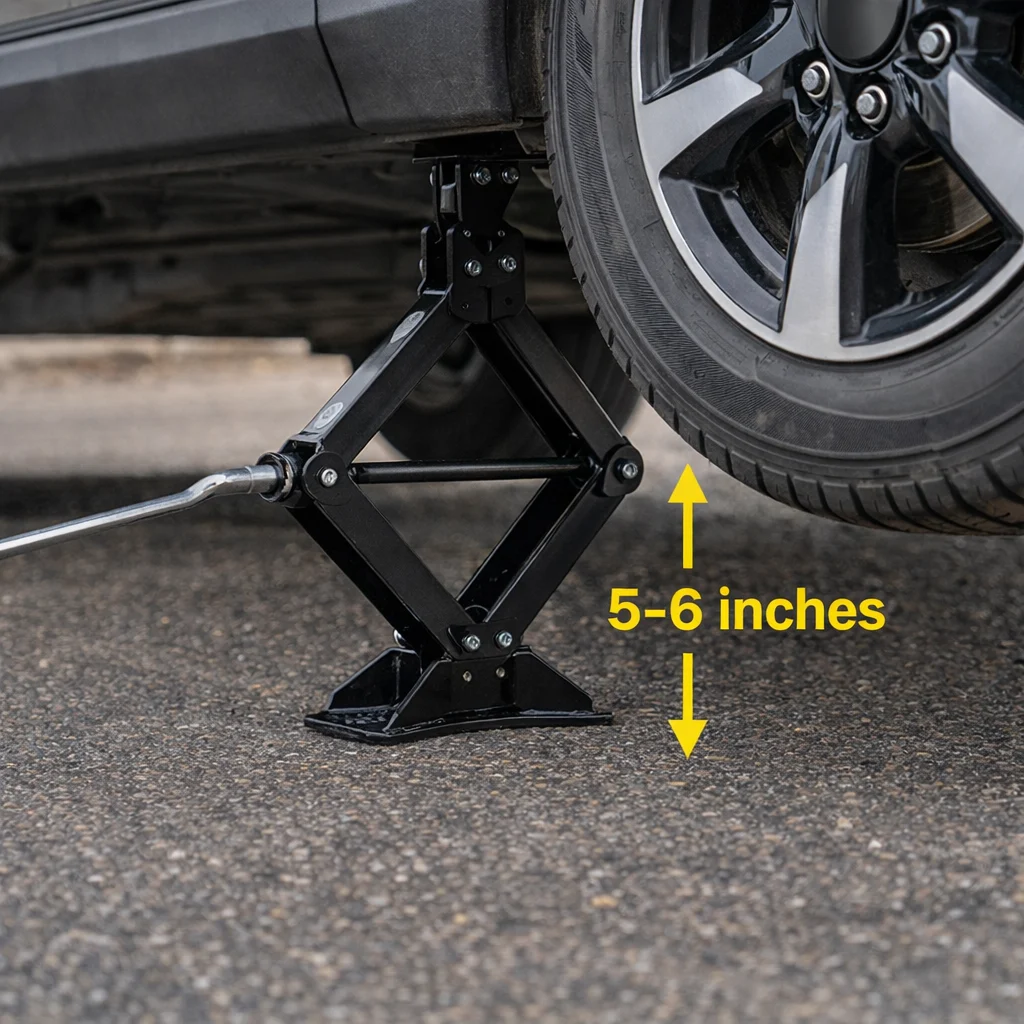
Place the car jack under the correct lifting point (check your manual).
Slowly raise the vehicle until the tire is about 5–6 inches off the ground.
4. Remove the Lug Nuts Completely
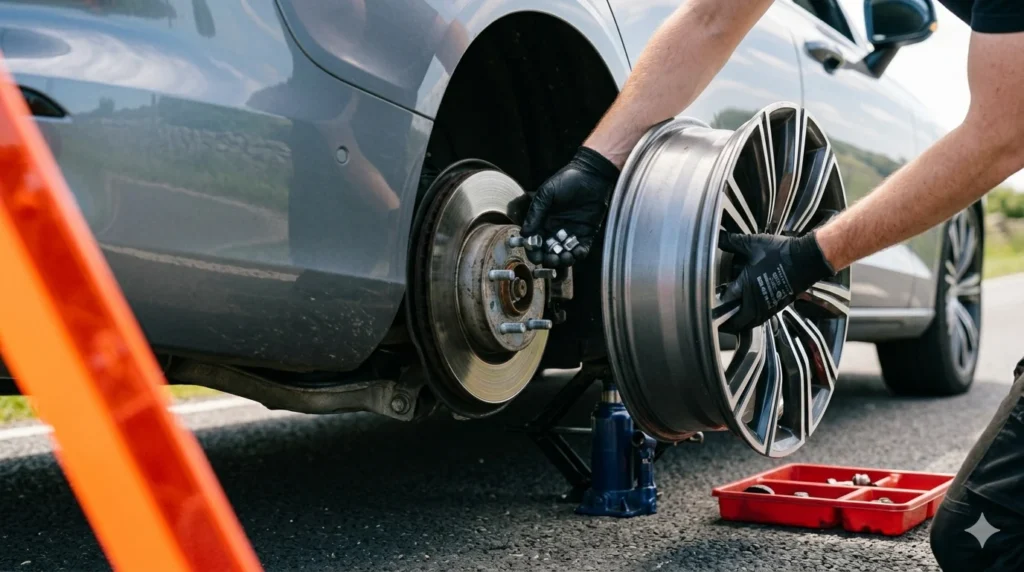
Now remove all lug nuts by hand and keep them in a safe place.
5. Remove the Flat Tire
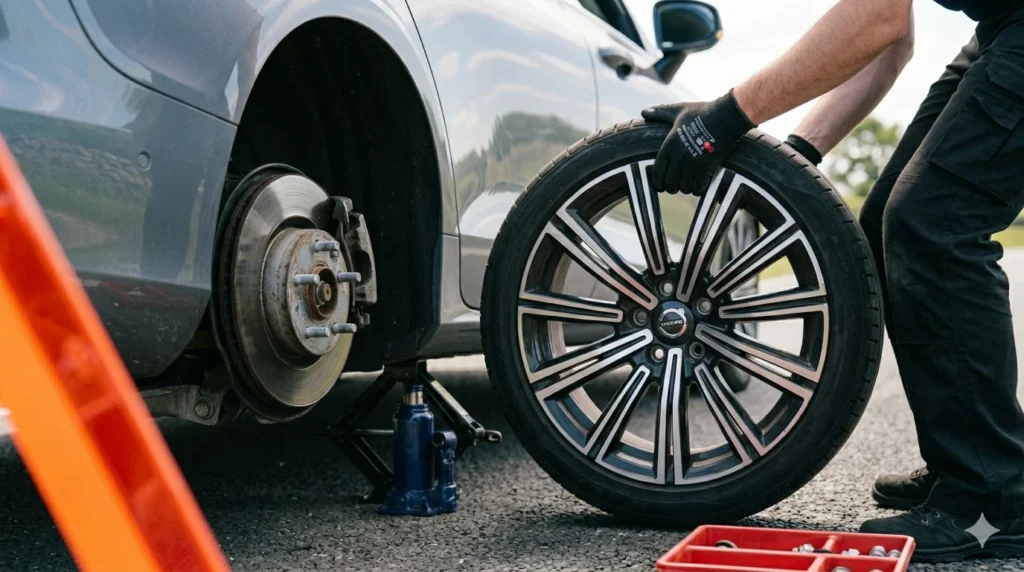
Pull the wheel straight toward you and place it aside.
6. Install the Spare Tire
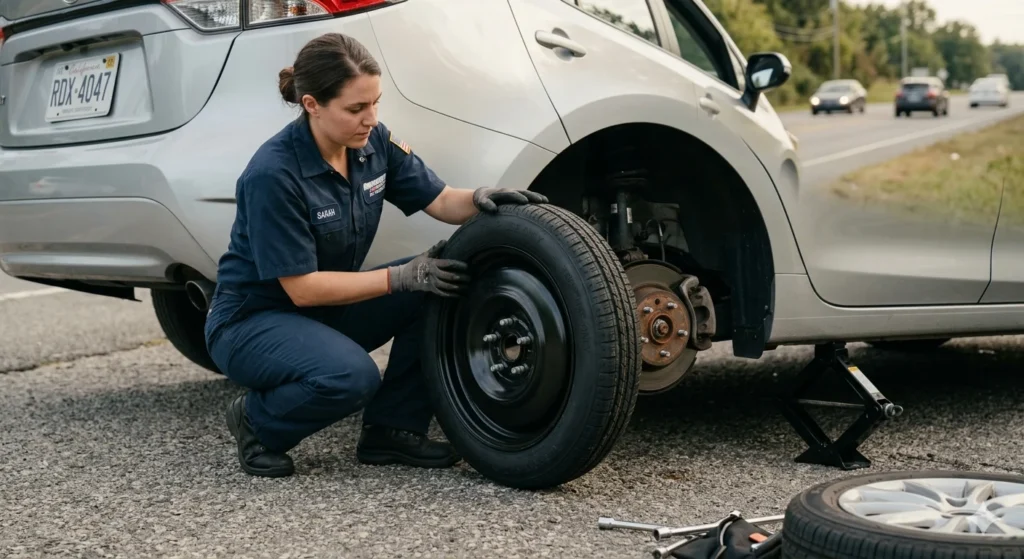
Align the spare tire with the wheel hub and push it into place.
7. Tighten Lug Nuts by Hand
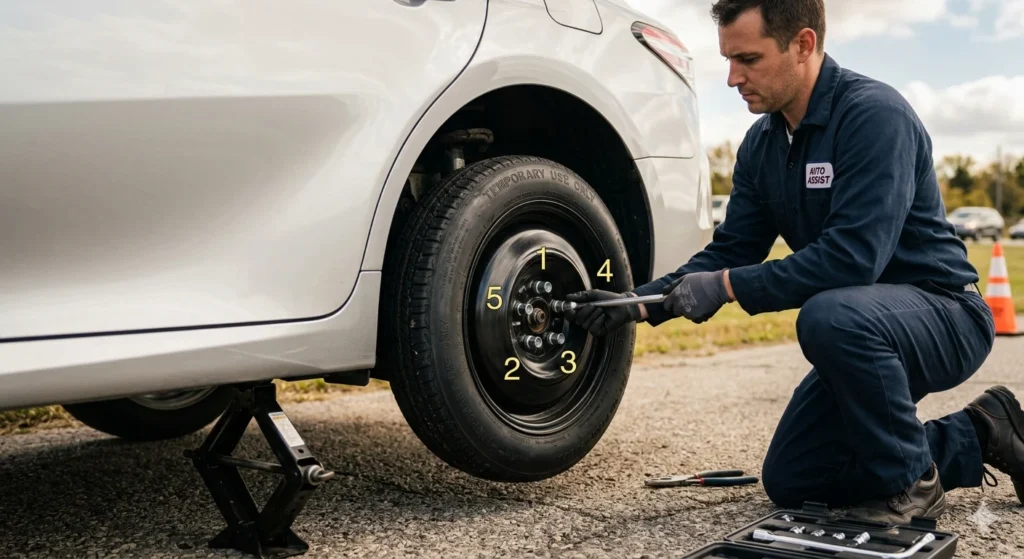
Put the lug nuts back and tighten them lightly by hand.
👉 Follow a diagonal (star) pattern for even fitting.
8. Lower the Vehicle
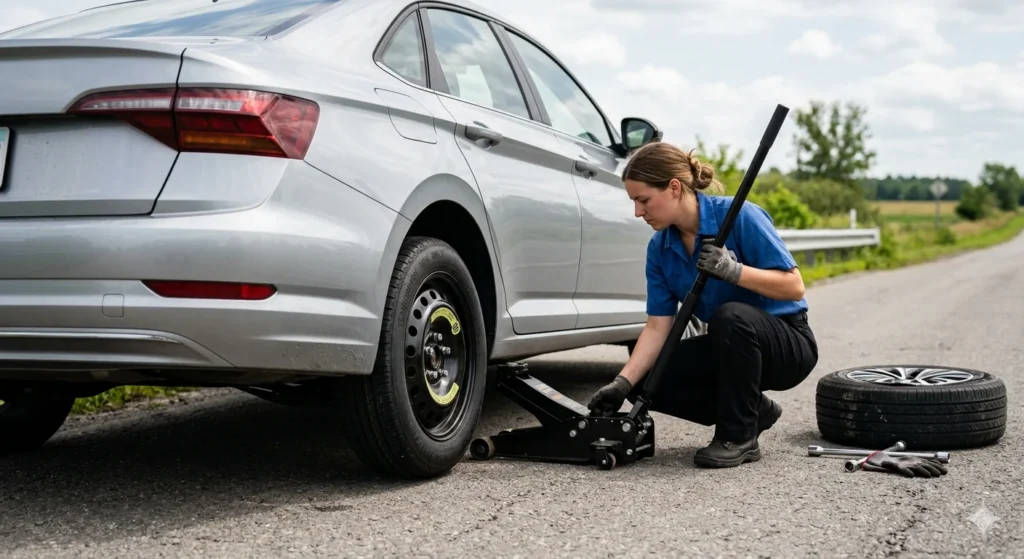
Slowly bring the car back down using the jack.
9. Fully Tighten the Lug Nuts
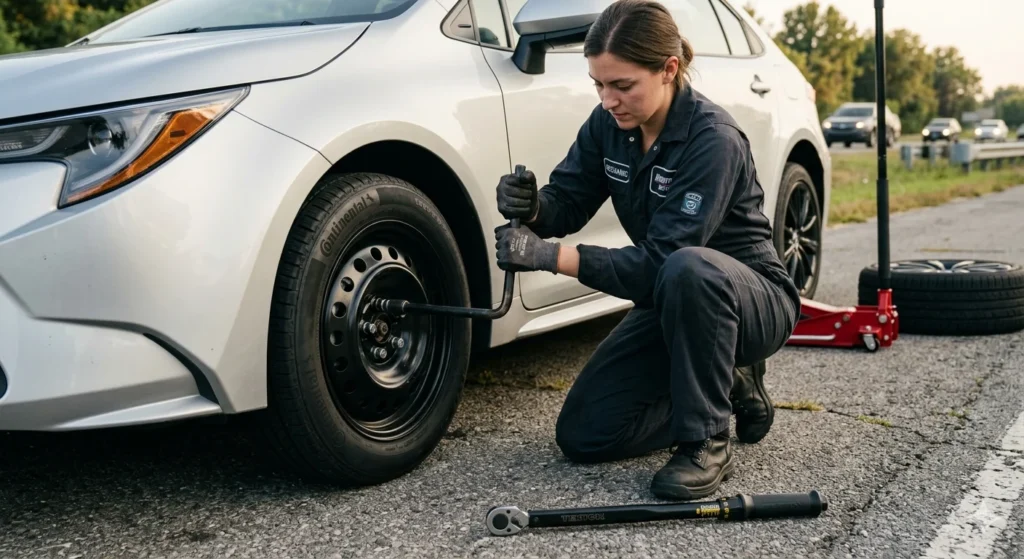
Use the lug wrench to tighten all nuts properly.
👉 Apply firm pressure
👉 Use a torque wrench if available
10. Reattach the Hubcap
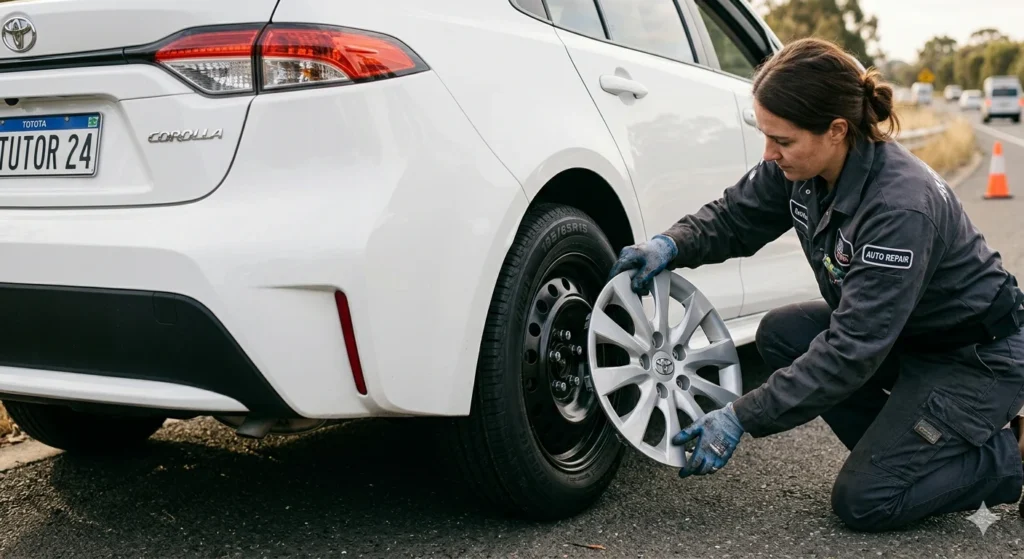
Put the hubcap or wheel cover back in place.
What to Do After Changing a Tire
After replacing your tire, don’t stop here:
- Check tire pressure
- Store tools properly
- Put the damaged tire in your trunk
- Visit a tire professional as soon as possible
- Replace or repair the damaged tire
Important Tip About Spare Tires
Temporary spare tires are not designed for long use:
- Smaller in size
- Lower speed limit
- Reduced durability
👉 Only use them for short distances
👉 Replace with a full tire quickly
Common Mistakes to Avoid
Avoid these common errors:
- Changing tire on a slope
- Not using the parking brake
- Fully removing lug nuts before lifting
- Incorrect jack placement
- Over-tightening or under-tightening lug nuts
- Ignoring tire pressure after installation
How Long Does It Take to Change a Tire?
- Beginners: 20–30 minutes
- Experienced drivers: 10–15 minutes
With practice, the process becomes much faster.
FAQs
1. Can I drive long distance on a spare tire?
No. Spare tires are temporary and should only be used for short distances.
2. What if I don’t have a jack?
You’ll need roadside assistance or a nearby mechanic to lift the car safely.
3. How tight should lug nuts be?
They should be firm and secure. A torque wrench is best for accuracy.
4. Is it safe to change a tire on the highway?
Only if absolutely necessary. Move to a safer area if possible.
5. How do I know if my tire needs replacement?
Check tread depth, cracks, bulges, or frequent air loss.
Conclusion
Learning how to change a tire is an essential life skill for every driver. It’s simple, practical, and can save you during emergencies.
By following the correct steps, using proper tools, and focusing on safety, you can confidently handle a flat tire anywhere.
If you ever feel unsure, don’t hesitate to contact a professional, but with this guide, you’re fully prepared to do it yourself.

I am Clara Hayes a unique and modern name with a classy, trending appeal.
I am known for elegance, simplicity, and global style.
On Grammexa.com, I stand out as a perfect contemporary name choice.