Have you ever wondered why ice turns into water at exactly 0°C but iron needs over 1,500°C to melt? Or why your chemistry teacher keeps asking if melting point is a physical or chemical property? This simple question confuses thousands of students, teachers, and science enthusiasts every month.
People search “is melting point a chemical or physical property” because they need a fast, reliable answer for homework, exams, lab reports, or just curiosity. The good news: it’s an easy concept once you see the difference between physical and chemical properties. In this article, you’ll get the direct answer, real-life examples, and everything you need to never doubt it again.
Is Melting Point a Chemical or Physical Property? – Quick Answer
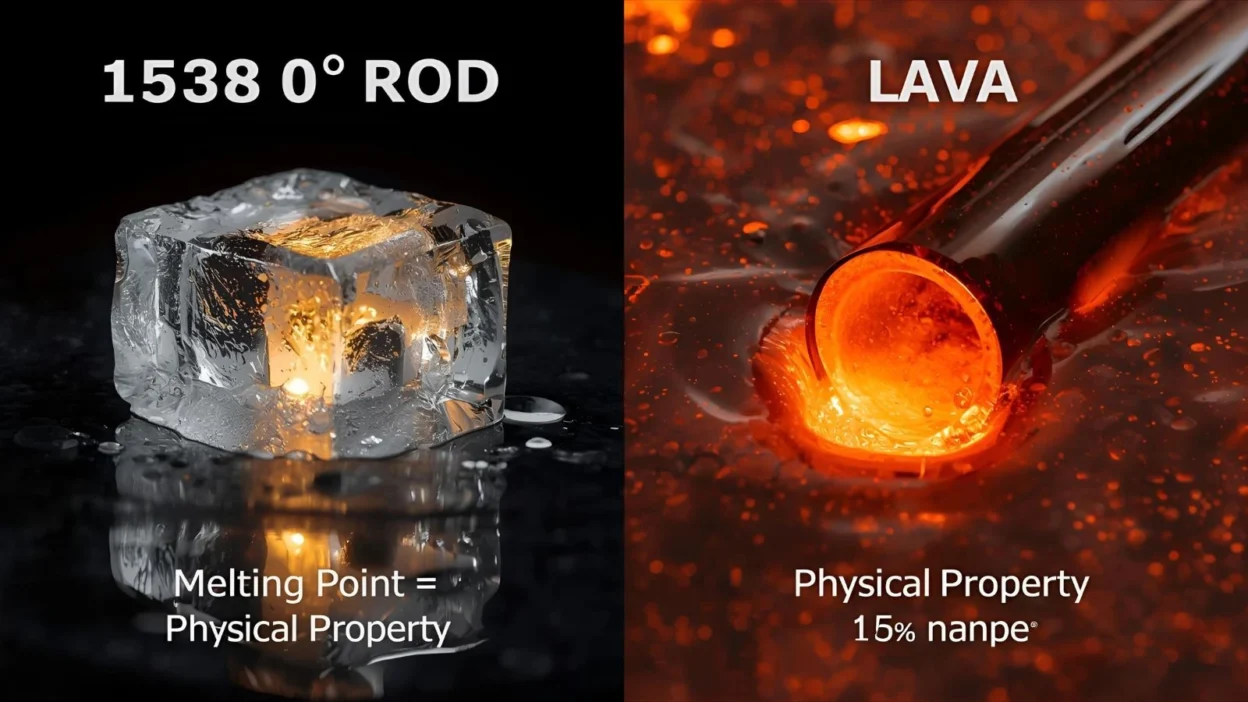
Melting point is a physical property.
It describes how a substance changes from solid to liquid when heated, without changing what the substance is made of. No new substances are formed.
Examples:
- Water melts at 0°C → still H₂O (physical)
- Iron melts at 1,538°C → still Fe (physical)
- Sugar melts at 186°C → still C₁₂H₂₂O₁₁ (physical)
Burning sugar and making carbon and water vapor? That’s a chemical property because new substances appear.
Why Melting Point Is Physical (Detailed Explanation)
Physical properties can be observed or measured without changing the identity of the substance. You can see, touch, or test them and the material stays the same.
Common physical properties:
- Color
- Density
- Boiling point
- Melting point
- Hardness
- Solubility
Chemical properties describe how a substance reacts or changes into new substances (combustion, reactivity with acid, oxidation, etc.).
When something melts, the molecules just move farther apart. The chemical bonds between atoms stay the same. That’s why melting point is always classified as a physical property.
Intensive vs Extensive Physical Properties
Melting point is also an intensive physical property. It does not depend on how much of the substance you have.
- Intensive (same no matter the amount): melting point, boiling point, density
- Extensive (changes with amount): mass, volume, length
This is why scientists love melting point – a tiny crystal or a huge block of the same pure substance melts at the exact same temperature.
Real-Life Examples of Melting Point as a Physical Property
- Chocolate makers check melting point to get the perfect snap and shine (physical, not chemical).
- Forensic scientists use melting point to identify unknown white powders (drugs, explosives, sugar – all have unique melting points).
- Metallurgists choose alloys with the right melting point for jet engines.
- Glacier scientists measure ice melting point to study climate change.
In every case, the substance stays chemically identical before and after melting.
Common Mistakes Students Make
- Thinking “melting involves breaking bonds” → Only intermolecular forces break, not chemical bonds.
- Confusing melting with burning or rusting → Those create new molecules.
- Calling it a chemical property because “heat is energy and energy is chemistry” → Heat can cause physical changes too.
Quick Comparison Table: Physical vs Chemical Properties
| Property Type | Example | Changes Identity? | New Substance Formed? |
|---|---|---|---|
| Physical | Melting point | No | No |
| Physical | Boiling point | No | No |
| Physical | Color | No | No |
| Chemical | Flammability | Yes | Yes |
| Chemical | Reacts with acid | Yes | Yes |
| Chemical | Rusting (oxidation) | Yes | Yes |
FAQs – Is Melting Point a Chemical or Physical Property?
Q: Is boiling point a chemical or physical property? A: Physical property (same reason as melting point).
Q: Is density a chemical or physical property? A: Physical.
Q: Why do teachers ask this question so often? A: It tests if you truly understand the difference between physical and chemical changes.
Q: Can melting ever be a chemical change? A: Almost never. The only rare exception is when a substance decomposes at its melting point (some organic compounds), but scientists then say it “decomposes on melting” instead of having a true melting point.
Q: Is heat of fusion a physical or chemical property? A: Physical (it’s the energy needed to melt without temperature change).
Q: Do mixtures have sharp melting points? A: No. Pure substances have sharp melting points; mixtures melt over a range. This is another clue that melting point describes identity (physical).
Q: Is solubility a physical or chemical property? A: Physical.
Conclusion
Melting point is 100% a physical property because it can be measured without changing the chemical identity of the substance. It’s intensive, repeatable, and one of the most useful ways to identify pure materials. Whether you’re a student facing a test, a teacher explaining the concept, or just a curious person, now you have the clear answer and the reasoning behind it. Remember the simple rule: if no new substance is created, it’s physical. Melting just lets molecules slide past each other – nothing more.

I am Victor Stone, a passionate learner and content creator at Grammexa.com, where language meets clarity.
I am dedicated to simplifying confusing words, grammar rules, and “vs” comparisons for modern readers.
I am here to make English easy, accurate, and trending one explanation at a time.