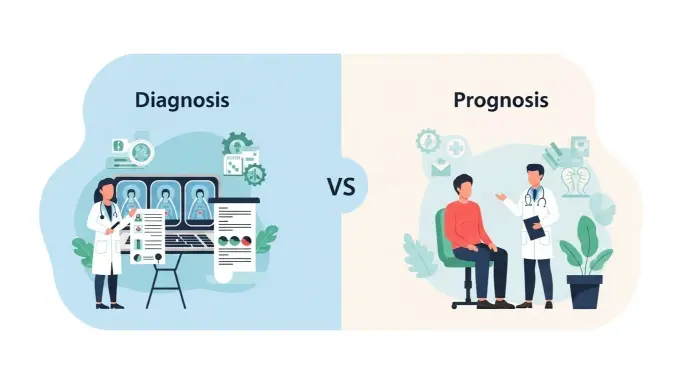
Many people search for prognosis vs diagnosis because these two medical terms sound similar and are often used together.
Doctors use them, health articles mention them, and patients hear them during medical visits. This creates confusion.
Are they the same thing? Do they mean different stages of care? Can you use one instead of the other?
The short answer is no they are not the same. Each word has a clear and important role in medicine and health writing.
Understanding the difference helps patients ask better questions, helps students learn faster, and helps writers use correct terms.
People usually search this keyword when reading medical reports, researching a disease, or preparing health-related content.
They want a quick answer but also a clear explanation they can trust.
This article solves that confusion. You will learn the exact meaning of prognosis and diagnosis, how they are used, common mistakes to avoid, and which one to choose in real-life situations.
Everything is explained in simple language, with examples you can use right away.
Prognosis vs Diagnosis Quick Answer
Diagnosis means identifying a disease or condition.
Prognosis means predicting what will happen next after the diagnosis.
Example:
- Diagnosis: The doctor diagnosed diabetes.
- Prognosis: The prognosis is good with proper treatment.
In short:
Diagnosis = What is the problem?
Prognosis = What is likely to happen?
The Origin of Prognosis vs Diagnosis
Both words come from Greek.
- Diagnosis comes from diagignōskein, meaning “to distinguish” or “to know through.”
- Prognosis comes from prognōsis, meaning “foreknowledge” or “prediction.”
They entered medical language centuries ago as doctors began separating identifying illness from predicting outcomes. There are no spelling variations between regions, but confusion exists because both terms are often used together in medical reports.
British English vs American English Spelling
There is no spelling difference between British and American English for these words.
| Term | British English | American English |
| Diagnosis | Diagnosis | Diagnosis |
| Prognosis | Prognosis | Prognosis |
The confusion is about meaning, not spelling.
Which Term Should You Use?
Use diagnosis when:
- Talking about finding or naming a disease
- Writing medical reports or test results
- Explaining what condition someone has
Use prognosis when:
- Talking about recovery or outcome
- Discussing survival, improvement, or risk
- Explaining what may happen in the future
Global advice:
Both terms are standard worldwide. Use them correctly based on context, not location.
Common Mistakes with Prognosis vs Diagnosis
❌ The prognosis is cancer.
✅ The diagnosis is cancer.
❌ The diagnosis is positive recovery.
✅ The prognosis is positive.
❌ Using prognosis before confirming a disease
✅ Always diagnose first, then give a prognosis
Prognosis vs Diagnosis in Everyday Examples
Email:
The diagnosis has been confirmed, and the prognosis is encouraging.
News:
Doctors shared the diagnosis but said the prognosis remains uncertain.
Social Media:
Got my diagnosis today. Hoping for a good prognosis.
Formal Writing:
Early diagnosis improves prognosis in most patients.
Prognosis vs Diagnosis Google Trends & Usage Data
Search interest in prognosis vs diagnosis is highest in:
- United States
- United Kingdom
- Canada
- Australia
- India
The term is mostly searched by:
- Medical students
- Patients
- Health writers
- Caregivers
Usage rises during health awareness campaigns and major medical news events.
Comparison Table: Prognosis vs Diagnosis
| Feature | Diagnosis | Prognosis |
| Purpose | Identify disease | Predict outcome |
| Timing | First step | After diagnosis |
| Focus | Present condition | Future condition |
| Used by | Doctors, labs | Doctors, specialists |
| Question answered | “What is it?” | “What will happen?” |
FAQs: Prognosis vs Diagnosis
1. Is prognosis the same as diagnosis?
No. Diagnosis finds the disease. Prognosis predicts the outcome.
2. Which comes first, diagnosis or prognosis?
Diagnosis always comes first.
3. Can prognosis change over time?
Yes. Prognosis can improve or worsen with treatment.
4. Is prognosis always accurate?
No. It is an educated prediction, not a guarantee.
5. Do all diseases have a prognosis?
Most do, but some outcomes are uncertain.
6. Can patients ask about prognosis?
Yes. Patients should ask to understand future risks.
7. Is prognosis only used in medicine?
Mostly, but it can also be used in business or science.
Conclusion
Understanding prognosis vs diagnosis is essential for clear medical communication.
A diagnosis tells you what condition exists, while a prognosis tells you what may happen next. They work together but serve different purposes.
Many people confuse these terms because they appear in the same conversation.
That confusion can lead to misunderstandings, fear, or incorrect information. Knowing the difference helps patients feel informed, helps students learn faster, and helps writers stay accurate.
There is no spelling difference between British and American English. The key is choosing the right term for the right situation.
Use diagnosis when naming a disease. Use prognosis when discussing recovery, risks, or future outcomes.
When used correctly, these words bring clarity instead of confusion.
If you are reading a medical report, writing health content, or talking to a doctor, understanding this difference gives you confidence and control.

I am Victor Stone, a passionate learner and content creator at Grammexa.com, where language meets clarity.
I am dedicated to simplifying confusing words, grammar rules, and “vs” comparisons for modern readers.
I am here to make English easy, accurate, and trending one explanation at a time.