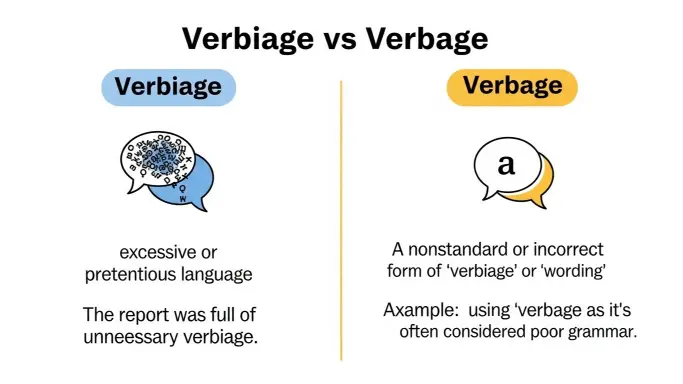
Many people search for verbiage vs verbage because they see both spellings used online, in emails, and even in professional writing.
This creates real confusion. Is verbage a British spelling? Is it informal slang? Or is it simply a mistake that became common over time?
The confusion usually starts when people hear the word spoken. Verbiage sounds like it could be spelled in several ways, and English has many words where spelling and sound do not match.
Writers, students, bloggers, and even native speakers often hesitate before using it. No one wants to look unprofessional because of a spelling error.
This article clears up that confusion completely. You will get a quick, direct answer, followed by a deeper explanation of where the word comes from, why the wrong spelling exists, and which version you should use in different contexts.
By the end, you will know exactly how to use verbiage vs verbage correctly in emails, articles, social media, and formal writing without second-guessing.
Verbiage vs Verbage Quick Answer
Verbiage is the correct spelling.
Verbage is incorrect and considered a spelling error.
Examples:
- ✅ The contract contains unnecessary verbiage.
- ❌ The contract contains unnecessary verbage.
Verbiage means too many words, often more than needed.
The Origin of Verbiage vs Verbage
The word verbiage comes from the French word verbiage, which is based on the Latin word verbum, meaning word. It entered English in the 1700s.
The spelling verbage does not come from history, Latin, or French. It appeared later due to phonetic spelling, where people wrote the word as it sounded. Over time, repeated misuse made it common online, but it never became correct.
In short:
- Verbiage → historical, correct, dictionary-approved
- Verbage → modern mistake, no linguistic basis
British English vs American English Spelling
Unlike many English words, verbiage does not change spelling between British and American English.
| English Type | Correct Spelling | Example |
| American | Verbiage | Legal verbiage |
| British | Verbiage | Political verbiage |
| Canadian | Verbiage | Marketing verbiage |
| Australian | Verbiage | Corporate verbiage |
There is no British version called verbage.
Which Spelling Should You Use?
Always use verbiage, regardless of audience.
- US audience → Verbiage
- UK/Commonwealth audience → Verbiage
- Global or SEO content → Verbiage
Using verbiage can reduce credibility and appear unprofessional, especially in formal or published writing.
Common Mistakes with Verbiage vs Verbage
Here are frequent errors people make:
- ❌ Thinking verbage is informal or slang
- ❌ Assuming verbage is British English
- ❌ Using both spellings in one document
- ❌ Auto-correct trusting incorrect usage
Correction:
Always replace verbage with verbiage.
Verbiage vs Verbage in Everyday Examples
Emails:
- Please reduce the verbiage in this email.
News:
- The bill was criticized for excessive legal verbiage.
Social Media:
- Too much marketing verbiage, not enough facts.
Formal Writing:
- Academic papers should avoid unnecessary verbiage.
Verbiage vs Verbage Google Trends & Usage Data
Search data shows that verbiage is widely used in:
- Legal writing
- Business communication
- Academic content
The term verbage appears mostly in:
- Informal searches
- Spelling-related queries
- “Is verbiage correct?” questions
This confirms that verbiage is searched because people are unsure, not because it is valid.
Comparison Table: Verbiage vs Verbage
| Term | Correct? | Meaning | Usage |
| Verbiage | ✅ Yes | Excessive wording | Formal & informal |
| Verbage | ❌ No | None (misspelling) | Avoid |
FAQs: Verbiage vs Verbage
1. Is verbiage ever correct?
No. It is always incorrect.
2. Why do people spell verbiage as verbage?
Because it sounds that way when spoken.
3. Is verbiage negative?
Usually yes. It implies unnecessary words.
4. Can verbiage be used positively?
Rarely, but sometimes in neutral descriptions.
5. Do dictionaries accept verbiage?
No. Major dictionaries list it as an error.
6. Is verbiage formal English?
Yes. It is common in professional writing.
7. Should I correct verbiage in edited text?
Yes. Always replace it with verbiage.
Conclusion
The debate around verbiage vs verbage is simpler than it appears.
There is only one correct spelling: verbiage. It has a clear history, strong dictionary support, and consistent usage across American, British, and global English.
The alternative spelling, verbage, exists only because of sound-based guessing and repeated mistakes.
If you write emails, blogs, academic papers, or business content, using the correct spelling matters. It improves clarity, protects credibility, and avoids confusion.
When readers see verbiage, they often question the writer’s expertise. Using verbiage ensures your writing looks professional and polished.
The best rule is simple: If you mean excessive or unnecessary wording, always write “verbiage.”
No exceptions. Once you remember this, you will never hesitate again and your writing will be clearer and stronger as a result.

I am Maya Brooks, a passionate writer and language enthusiast at Grammexa.com, where words are explained with clarity and purpose.
I am dedicated to simplifying confusing terms, comparisons, and grammar topics for readers worldwide.
I am here to help you learn smarter, write better, and understand language with confidence.