When I first started learning about business leadership, I often saw the titles CEO and COO used together and assumed they performed similar jobs.
Many professionals, students, entrepreneurs, and job seekers make the same mistake. While both positions sit at the top of an organization, their responsibilities are very different.
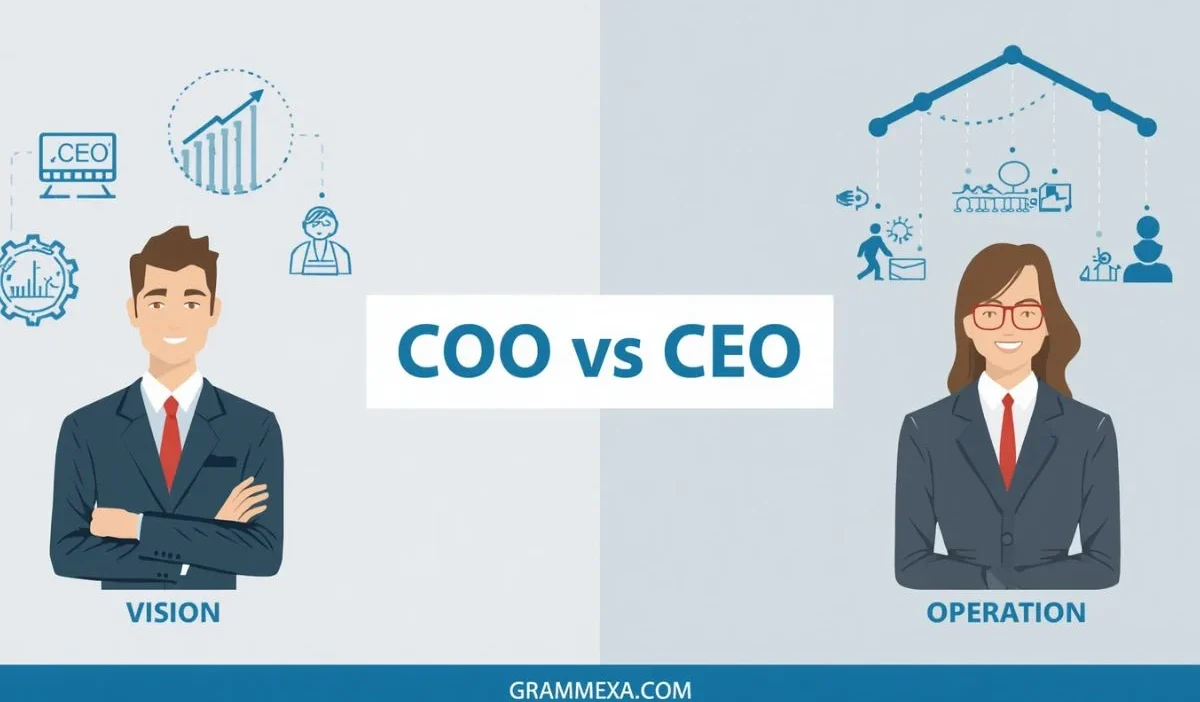
One focuses on setting the company’s direction, while the other ensures that plans are executed efficiently.
Understanding the distinction is important whether you’re exploring career paths, reading business news, or managing a growing company.
In this guide, you’ll learn how these executive roles compare, who holds more authority, how they work together, and why some organizations have both positions while others do not.
Quick Answer
The Chief Executive Officer (CEO) is the highest-ranking leader in a company and is responsible for its vision, strategy, and overall success.
The Chief Operating Officer (COO) oversees day-to-day operations and ensures that business goals are carried out effectively.
In simple terms:
- The CEO decides where the company should go.
- The COO helps the company get there.
CEO and COO at a Glance
| Feature | CEO | COO |
|---|---|---|
| Full Form | Chief Executive Officer | Chief Operating Officer |
| Position | Highest-ranking executive | Senior operations executive |
| Reports To | Board of Directors | CEO |
| Main Focus | Strategy and growth | Execution and operations |
| Public Representation | High | Moderate |
| Long-Term Planning | Leads | Supports |
| Daily Operations | Oversees indirectly | Manages directly |
What Does a CEO Do?
The CEO serves as the organization’s top decision-maker and is ultimately responsible for business performance. This executive develops long-term strategies, communicates with investors, works closely with the board, and guides the company’s overall direction.
Common responsibilities include:
- Defining business goals
- Making major corporate decisions
- Leading executive teams
- Building investor relationships
- Identifying growth opportunities
- Representing the organization publicly
A CEO spends more time focusing on the future than on daily operations.
What Does a COO Do?
The COO is responsible for transforming strategy into action. This role focuses on managing processes, departments, and resources to ensure the organization operates efficiently.
Typical responsibilities include:
- Managing daily operations
- Improving business processes
- Coordinating departments
- Monitoring performance metrics
- Implementing strategic initiatives
- Solving operational challenges
Many organizations view the COO as the executive responsible for execution and operational excellence.
Who Has More Authority?
In most companies, the CEO holds greater authority because the position sits at the top of the executive hierarchy.
A typical leadership structure looks like this:
- Board of Directors
- CEO
- COO
- Other Executive Leaders
Although the COO may influence major decisions, final responsibility usually rests with the CEO.
Why Do Some Companies Have a COO?
Not every organization requires a COO.
Smaller businesses often operate successfully without one. As companies expand, however, operations become more complex and leadership responsibilities increase.
Organizations commonly add a COO when they need:
- Better operational oversight
- Faster execution of strategic plans
- Improved coordination between departments
- Support for rapid growth
- Greater organizational efficiency
Daily Focus: Strategy vs Execution
One of the easiest ways to understand these positions is by looking at their daily priorities.
CEO Focus
- Business growth
- Strategic planning
- Investor relations
- Corporate partnerships
- Market expansion
- Long-term vision
COO Focus
- Team management
- Operational efficiency
- Workflow optimization
- Performance monitoring
- Resource allocation
- Project execution
The CEO concentrates on where the company is heading, while the COO focuses on how it gets there.
Can a COO Become a CEO?
Yes. Many successful chief executives previously served in operational leadership positions.
The role provides experience in:
- Leadership
- Team management
- Business operations
- Financial oversight
- Strategic execution
Because of this broad exposure, many boards consider experienced COOs strong candidates for future CEO positions.
Startup Leadership Structure
In startups, founders often handle both strategic and operational responsibilities during the early stages.
As the business grows, leadership duties become more specialized.
A startup CEO typically focuses on:
- Fundraising
- Vision
- Partnerships
- Growth strategy
A startup COO typically focuses on:
- Internal systems
- Team management
- Processes
- Operational scaling
This division allows founders to focus on expansion while maintaining operational efficiency.
Common Misconceptions
Several misunderstandings frequently create confusion.
The COO Runs the Entire Company
The COO manages operations, but the CEO remains the top executive.
Every Company Needs a COO
Many successful organizations operate without this position.
Both Roles Are Interchangeable
While they work closely together, their responsibilities differ significantly.
Operations Roles Have Less Influence
Strong operational leadership often plays a major role in business success and growth.
FAQs
Is the CEO higher than the COO?
Yes. The CEO typically holds the highest executive position within a company.
Who does the COO report to?
The COO usually reports directly to the CEO.
Can one person hold both roles?
In smaller businesses and startups, one individual may perform both functions.
Which position focuses more on strategy?
The CEO generally leads strategic planning and long-term decision-making.
Which role manages daily operations?
Operational oversight is usually the responsibility of the COO.
Is becoming a COO a good path to executive leadership?
Yes. Many senior leaders gain valuable experience through operational management roles before advancing further.
Conclusion
Understanding the difference between these two leadership positions becomes much easier when you focus on their primary responsibilities.
The CEO provides vision, direction, and strategic leadership, while the COO manages execution, operations, and organizational performance.
Both roles contribute to business success, but they do so in different ways.
Whether you’re exploring career opportunities, studying corporate structures, or building a company, knowing how these executives work together helps you better understand modern business leadership.
Read More:

I am Sophie Lane, a passionate voice behind Grammexa.com, where words meet clarity.
I am here to simplify language, comparisons, and meanings for curious minds worldwide.
I am driven by creativity, accuracy, and the love for powerful, understandable content.