Many people search for fruit vs vegetable because the difference is confusing.
We grow up learning that apples are fruits and carrots are vegetables, but then someone says tomatoes are fruits.
That creates doubt. Is the rule based on taste? Cooking style? Or science?
This confusion happens because fruit vs vegetable is explained in two different ways: botanical and culinary.
Botanists use plant science. Chefs and everyday people use kitchen habits. Both are correct, but they answer different questions.
People also search this keyword for health reasons, school homework, quizzes, recipes, and even legal cases.
Yes, tomatoes were once discussed in court. Knowing the correct meaning helps you speak clearly, write accurately, and avoid common mistakes.
This article gives a quick answer, then a clear explanation, simple examples, tables, FAQs, and usage advice.
By the end, you will know exactly how to explain fruit vs vegetable in daily life and professional writing—without confusion.
Fruit vs Vegetable Quick Answer
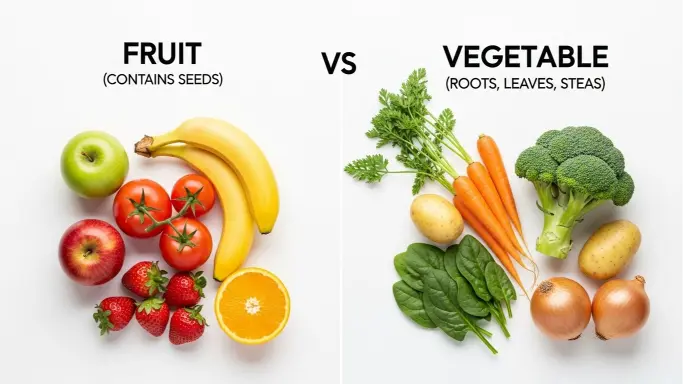
Fruit is the part of a plant that comes from a flower and contains seeds.
Vegetable is any other edible part of a plant, like roots, stems, or leaves.
Examples:
- Tomato → Fruit (has seeds)
- Apple → Fruit
- Carrot → Vegetable (root)
- Spinach → Vegetable (leaf)
The Origin of “Fruit vs Vegetable”
The word fruit comes from the Latin fructus, meaning “enjoyment” or “produce.”
The word vegetable comes from Latin vegetabilis, meaning “growing.”
The confusion in fruit vs vegetable exists because:
- Botany (plant science) defines fruit by seeds.
- Cooking and culture define vegetables by taste and use.
There are no spelling differences here, only definition differences based on context.
British English vs American English Spelling
There is no spelling difference between British and American English for fruit or vegetable.
| Term | British English | American English |
| Fruit | Fruit | Fruit |
| Vegetable | Vegetable | Vegetable |
| Fruit vs Vegetable | Same usage | Same usage |
The difference is how the words are used, not how they are spelled.
Which Term Should You Use?
- Scientific or academic writing → Use botanical definition
- Cooking, recipes, daily speech → Use culinary definition
- Global or SEO content → Explain both meanings clearly
If your audience is general readers, always clarify the context.
Common Mistakes with Fruit vs Vegetable
❌ Thinking taste decides everything
✅ Seeds decide fruit (botany)
❌ Calling tomatoes “wrong” as vegetables
✅ Correct in cooking, fruit in science
❌ Assuming spelling changes by country
✅ Spelling is always the same
Fruit vs Vegetable in Everyday Examples
Email:
“Tomatoes are technically fruits, but we treat them as vegetables in cooking.”
News:
“Experts explain the fruit vs vegetable debate behind tomatoes.”
Social Media:
“Did you know cucumbers are fruits? #FruitVsVegetable”
Formal Writing:
“Botanically, fruits develop from flowers and contain seeds.”
Fruit vs Vegetable Google Trends & Usage Data
Search interest in fruit vs vegetable is high worldwide, especially in:
- United States
- United Kingdom
- India
- Pakistan
- Australia
People mostly search it for:
- School questions
- Health topics
- Food facts
- Trivia and quizzes
The keyword spikes during exam seasons and viral food debates.
Fruit vs Vegetable Comparison Table
| Item | Botanical Term | Culinary Term |
| Tomato | Fruit | Vegetable |
| Cucumber | Fruit | Vegetable |
| Apple | Fruit | Fruit |
| Potato | Not a fruit | Vegetable |
| Pumpkin | Fruit | Vegetable |
FAQs: Fruit vs Vegetable
1. Is tomato a fruit or vegetable?
Botanically fruit, culinary vegetable.
2. Are cucumbers fruits?
Yes, they contain seeds.
3. Are vegetables healthier than fruits?
Both are healthy and important.
4. Is fruit vs vegetable a spelling issue?
No, it’s a definition issue.
5. Why do chefs call fruits vegetables?
Because of taste and cooking use.
6. Can something be both?
Yes, depending on context.
7. Which definition is correct?
Both are correct in their own fields.
Conclusion
The fruit vs vegetable debate is confusing because people mix science with cooking. Botanically, fruits come from flowers and contain seeds.
Vegetables are other plant parts. In the kitchen, vegetables are savory foods used in main dishes.
Neither definition is wrong. The key is context. Use the botanical meaning in science and education.
Use the culinary meaning in recipes and daily speech. When writing for a wide audience, explain both clearly to avoid confusion.
Understanding fruit vs vegetable helps in communication, learning, and content writing.
It also improves SEO clarity and user trust. Once you know the difference, the confusion disappears and the debate finally makes sense.

I am Victor Stone, a passionate learner and content creator at Grammexa.com, where language meets clarity.
I am dedicated to simplifying confusing words, grammar rules, and “vs” comparisons for modern readers.
I am here to make English easy, accurate, and trending one explanation at a time.